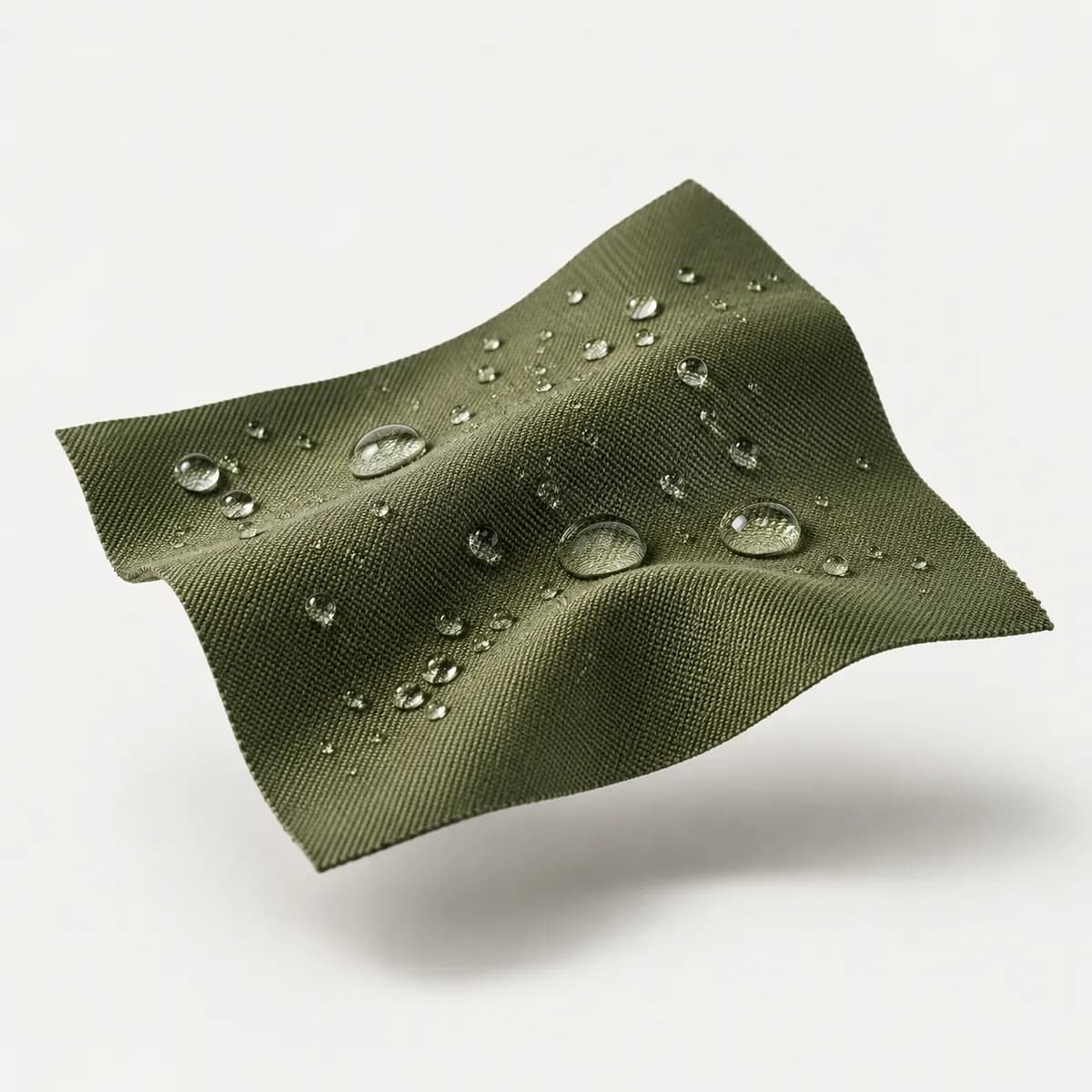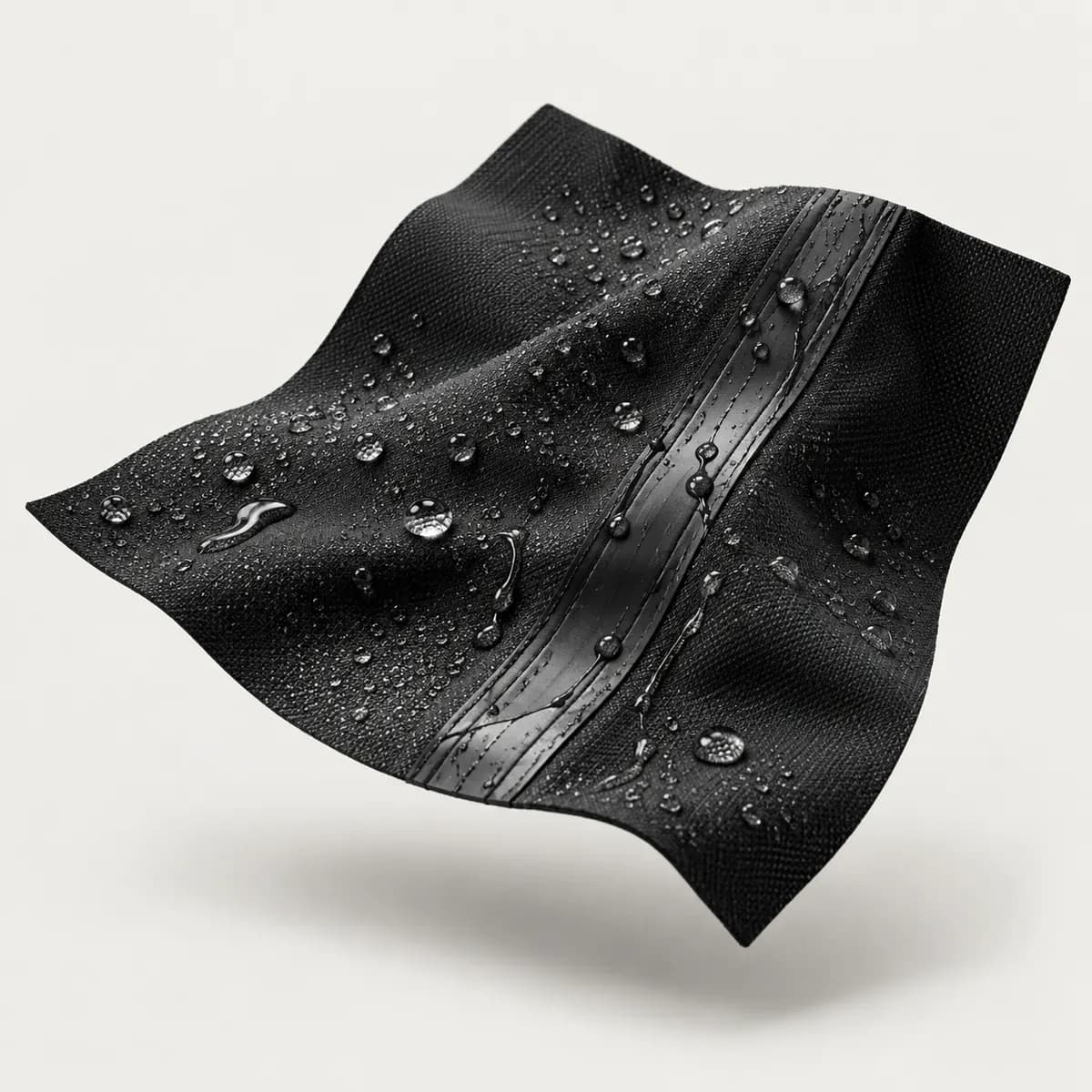
Waterproof fabric uses a coating or a laminated membrane that stops water passing through the material. Combined with taped seams, it keeps the wearer dry in proper rain.
We use waterproof fabrics for rain jackets, outdoor shells and workwear where protection matters more than a light feel.
What makes a garment waterproof
- A waterproof coating or membrane in the fabric
- Seam tape sealing every stitched seam
- Storm flaps or water-resistant zips
- Adjustable hood and cuffs to close gaps
Choosing the right level
Different coatings and membranes give different levels of water protection and breathability. Tell us how the jacket will be used, for example city commuting or outdoor work, and we will recommend a suitable fabric.
Options at a glance
| Property | Details |
|---|---|
| Construction | Coated or laminated technical shell |
| Seams | Taped / sealed |
| Protection | Rain and wet weather |
| Options | Hoods, storm flaps, water-resistant zips |
| Good for | Rain jackets, outdoor shells, workwear |
Key facts
Waterproof fabric has a coating or membrane that blocks water. With taped seams it keeps rain out, and DEAL N TRADING uses it for rain jackets, outdoor shells and workwear.
Before you order
Why are taped seams needed?
Stitching creates tiny holes. Seam tape seals those holes so water cannot get through at the seams.
Is waterproof fabric heavier?
It can be slightly heavier and less airy than water-resistant fabric. Breathable membranes help reduce this.